Understanding Traditional Chinese Medicine
Traditional Chinese Medicine (TCM) represents a holistic health system that has evolved over thousands of years, dating back approximately 2000 to 3000 years. The foundation of TCM is based on the philosophical concepts rooted in Daoism, which emphasizes the importance of harmony within the body and between individuals and their environment. This approach starkly contrasts with Western medicine, which predominantly focuses on the diagnosis and treatment of specific diseases and their symptoms.
At the core of TCM is the belief that health is achieved through a balanced flow of Qi (pronounced “chee”), which is considered a vital energy that circulates throughout the body. Any disruption or imbalance in the flow of Qi may lead to illness. Thus, TCM practitioners aim to restore this balance by employing various therapeutic modalities, including acupuncture, herbal medicine, cupping, and tai chi. While Western medicine often prioritizes the use of medications and surgical interventions, TCM emphasizes the body’s innate ability to heal through natural means.
Moreover, TCM utilizes a unique diagnostic framework, including pulse diagnosis and tongue examination, to gain insight into an individual’s overall health. These methods allow practitioners to identify not just the symptoms of a specific ailment, but also the underlying patterns that contribute to the person’s health status. This comprehensive assessment underscores the holistic mindset of TCM, where the connections between physical, emotional, and spiritual health are carefully considered.
In summary, understanding Traditional Chinese Medicine requires an appreciation of its historical roots and its fundamental differences from Western medical practices. Emphasizing a holistic perspective, TCM seeks to treat the whole person rather than merely addressing isolated symptoms, thereby promoting long-term health and wellness.
Core Principles of TCM: Zang-Fu Organs and Qi
Traditional Chinese Medicine (TCM) is grounded in a complex understanding of the human body and its interplay with the environment. Central to TCM are the concepts of Zang-Fu organs and Qi, which collectively represent the foundation of health and wellness in this ancient system of medicine. The Zang-Fu organs, which include the heart, lungs, spleen, liver, kidneys, and others, serve distinct functions yet operate in a network of interconnectedness.
In TCM, each Zang organ is thought to be responsible not only for its physiological functions but also for a range of emotional and psychological attributes. For instance, the liver is associated with the emotion of anger, while the heart governs joy. This relationship highlights the holistic perspective of TCM, where mental and emotional states can directly influence physical health. Balancing these organs through appropriate techniques is crucial for achieving harmony within the body.
Qi, often translated as “life force” or “vital energy,” is another pivotal element within TCM. As an information carrier, Qi circulates throughout the body via specific pathways known as meridians. These channels connect the Zang-Fu organs, allowing for the exchange of energy necessary for sustaining life. The unobstructed flow of Qi is believed to be vital for maintaining health, as stagnation or deficiency in Qi can manifest as various health problems ranging from fatigue to chronic diseases.
Health is thus perceived not merely as the absence of disease but as the equilibrium of Qi and the proper functioning of the Zang-Fu organs. Imbalances within this intricate system can reflect both physical ailments and surface-level health conditions. For example, symptoms such as digestive issues can indicate an underlying imbalance in the spleen or stomach, while emotional disturbances may correlate with a dysfunction of related organs. Understanding and addressing these core principles of TCM empowers individuals to pursue a more holistic approach to their health.
Diagnosis and Treatment in TCM: Beyond Symptoms
Traditional Chinese Medicine (TCM) employs a unique approach to diagnosis and treatment that extends beyond merely noting symptoms. At the core of TCM is the principle of syndrome differentiation, which involves a comprehensive assessment of the individual’s overall health and balance. This method takes into account various factors, including the patient’s lifestyle, emotional state, and environmental influences, as well as their physical symptoms.
In TCM, diagnosing a disease involves analyzing multiple dimensions such as the cause, mechanism, location, and nature of the disorder. Practitioners utilize various methods, including observation, listening, inquiry, and palpation, which collectively form the basis of TCM diagnostics. This multifaceted approach allows practitioners to identify patterns or syndromes that may not align directly with the presenting symptoms, providing a deeper understanding of the patient’s condition.
Key to the diagnostic practices in TCM are the theories of yin-yang and the five elements, which provide a framework for understanding the interplay between the body’s physiological functions and the environment. The yin-yang theory emphasizes the balance between opposing forces within the body, such as hot and cold or active and passive, while the five elements—wood, fire, earth, metal, and water—illustrate how these forces relate to various organ systems and bodily functions. These theories facilitate a holistic diagnosis by helping practitioners identify the underlying imbalances that contribute to illness.
Furthermore, it is essential to recognize that similar syndromes may manifest in different ways for different individuals, leading to tailored treatment approaches. In TCM, treatments can vary widely, utilizing acupuncture, herbal medicine, dietary adjustments, and lifestyle changes to restore balance and health. Each treatment plan is uniquely designed to address the specific syndrome of the individual rather than just the symptoms of the disease, exemplifying the comprehensive nature of TCM.
Common TCM Therapies: Acupuncture, Herbal Medicine, and Qigong
Traditional Chinese Medicine (TCM) offers a diverse array of therapies, with acupuncture, herbal medicine, and qigong being among the most widely recognized. Each of these therapies adheres to the foundational principles of TCM, focusing on the harmonious balance of Qi (vital energy) in the body.
Acupuncture involves the insertion of fine needles at specific points on the body, known as acupoints. This practice is based on the concept that stimulating these points can restore the balance of Qi and facilitate the body’s natural healing processes. Research has demonstrated that acupuncture may be effective in managing pain, reducing inflammation, and improving overall well-being by influencing the release of endorphins and other neuro-transmitters.
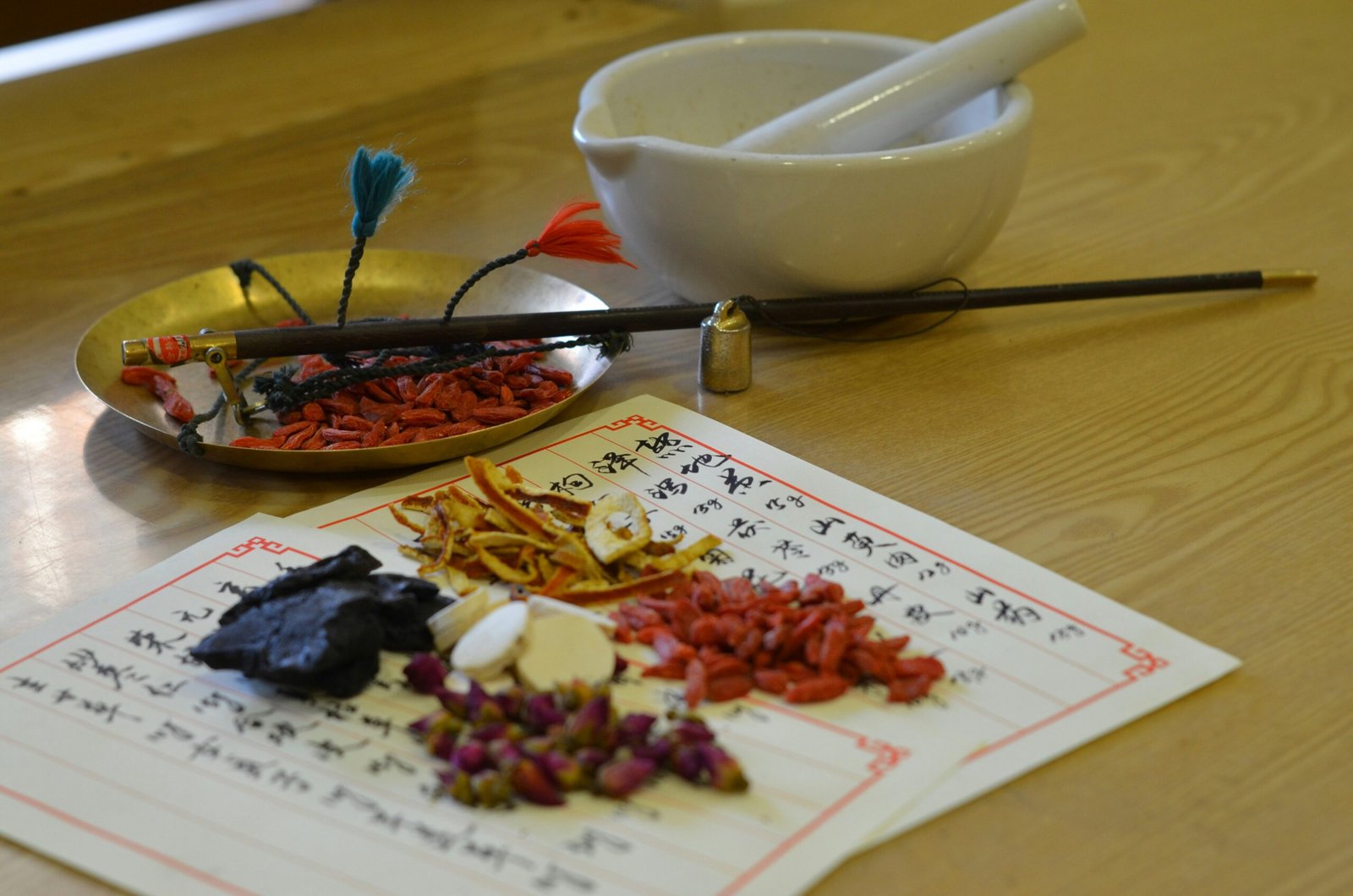
Herbal medicine, another cornerstone of TCM, utilizes a vast array of natural substances, including plants, roots, and minerals. These herbal remedies are believed to work synergistically, enhancing their therapeutic effects. Each formulation is tailored to the individual’s specific health condition, emphasizing the TCM approach of personalization and holistic care. Herbal medicine is often utilized to strengthen the immune system, promote healthy digestion, and restore balance within the body.
Qigong is a practice that combines movement, meditation, and breath regulation to cultivate and balance Qi. This ancient discipline enhances physical health, emotional stability, and spiritual growth through its gentle exercises and mindfulness techniques. It encourages practitioners to develop a deep connection to their bodies and promotes relaxation, thereby supporting overall health.
Modern science has also explored the idea of ‘information therapy’ within TCM, which suggests that the information contained in Qi can influence health outcomes. This concept aligns with contemporary research around the efficacy of these traditional therapies, demonstrating that ancient practices continue to hold relevance in modern healthcare paradigms.